Dermatology
Alopecia areata and the SALT score: how scalp involvement is measured
What alopecia areata is, why dermatologists quantify hair loss with the SALT score instead of eyeballing it, how the four scalp regions are weighted, and what an S0–S5 grade does and does not tell you.
Free online tool
SALT Alopecia Score
What alopecia areata actually is
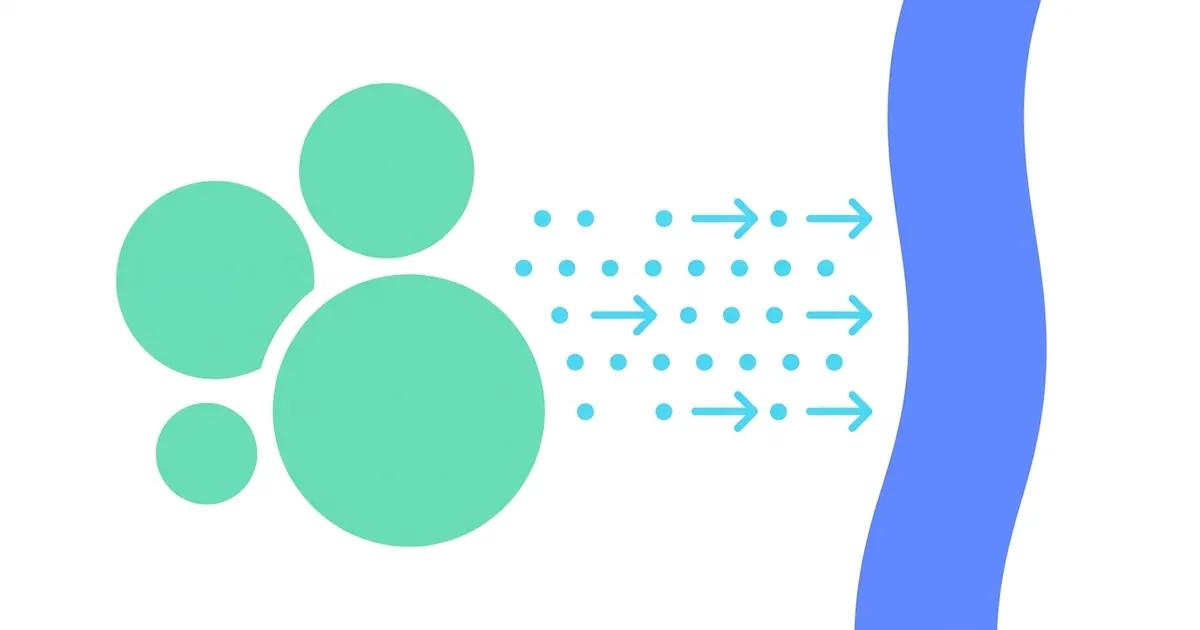
Alopecia areata is an autoimmune condition in which the immune system attacks the hair follicle, causing hair to fall out in well-defined patches. It is non-scarring: the follicle survives the attack, which is why hair can regrow even after long periods of loss. It affects children and adults of both sexes, and it is not caused by poor hygiene, diet, or hair products.
The course is famously unpredictable. Some people have a single patch that regrows within months and never returns; others cycle through episodes for years. This variability is exactly why a reproducible measurement matters: without one, "a bit better than last time" is the only thing anyone can say.
Why a number instead of an impression
The SALT score (Severity of Alopecia Tool) was introduced in 2004 by the National Alopecia Areata Foundation working group led by Elise Olsen, to standardise how scalp involvement is reported. Before it, two dermatologists looking at the same head could describe it in two different ways, which made treatments impossible to compare across studies.
SALT expresses one thing only: the percentage of the scalp surface with no hair, from 0 to 100. It is now the standard endpoint in alopecia areata clinical trials, which is why treatment results are usually reported as "SALT50" or "SALT90" — the proportion of patients whose score improved by 50% or 90%.
How the four regions are weighted
The scalp is divided into four areas, and each contributes according to how much surface it actually represents. The top of the head counts for far more than either side, which is why the same visible patch produces a very different score depending on where it sits.
Weight of each scalp region
Top (vertex)
40%
The largest single contributor. Loss here moves the score fastest.
Back (occiput)
24%
The second largest area.
Right side
18%
Each side carries the same weight, well under half of the top.
Left side
18%
Symmetric to the right: the same 18%.
For each region you estimate what percentage of that region has no hair, multiply it by the region's weight, and add the four results. A scalp with half the top affected and nothing else scores 20: 50% of 40. The same 50% loss confined to one side would score 9.
What the S0–S5 grades mean
The numeric score is then placed in a band, which is the shorthand used in clinical notes and trial papers.
Severity bands
S0
No loss
No detectable hair loss.
S1
< 25%
Limited patchy loss.
S2
25–49%
Between a quarter and half of the scalp is bare.
S3
50–74%
More than half, but some hair remains.
S4
75–99%
Extensive loss, scalp largely affected.
S5
100%
Complete scalp loss (alopecia totalis).
SALT measures the scalp, and only the scalp
Loss of eyebrows, eyelashes, beard, or body hair is not part of the score. Those are recorded separately, and their loss matters clinically even when the SALT score is low.
What the score does not tell you
A SALT score is a measurement, not a diagnosis and not a prognosis. It says how much scalp is currently bare; it says nothing about why, about whether hair will regrow, or about which treatment will work. Two people with an identical score can have completely different outlooks.
- It does not distinguish alopecia areata from other causes of hair loss. Patchy loss can also come from tinea capitis, trichotillomania, or scarring alopecias, which need entirely different treatment.
- It does not capture disease activity. A stable score can hide hair falling out in one area while regrowing in another.
- It does not measure impact. Distress does not scale with percentage: a small patch at the hairline can affect someone far more than extensive loss affects someone else.
- It is an estimate by eye. Agreement between observers is good but not perfect, which is why serial scores by the same person are more informative than a single number.
When to see a dermatologist
Reasons to get it looked at
- Any patchy hair loss that appears for the first time, so the cause can be confirmed. Several conditions look alike and only some respond to the same treatment.
- Loss that spreads quickly over weeks, or that involves eyebrows and eyelashes.
- Redness, scaling, itching, pain, or visible scarring of the scalp — these point away from alopecia areata and towards conditions that can destroy the follicle permanently.
- Hair loss in a child, which needs a paediatric assessment.
- Any degree of loss that is affecting mood, sleep, work, or social life. That is a clinical reason on its own, independent of the score.
Common misconceptions
- "It is caused by stress" → Stress may act as a trigger in some people, but alopecia areata is an autoimmune condition, not a consequence of worrying.
- "The hair is gone for good" → The follicle is not destroyed. Regrowth is possible even after years, though it cannot be promised.
- "A high score means it will keep getting worse" → The score is a snapshot. It carries no information about what happens next.
- "Special shampoos or supplements will fix it" → No topical cosmetic product treats the underlying autoimmune process.
This tool does not diagnose
Calculating a SALT score is a way to track and describe hair loss consistently over time. It is not a diagnosis, and it does not replace an examination by a dermatologist.
Sources
- Olsen EA et al. (2004). Alopecia areata investigational assessment guidelines — Part II. National Alopecia Areata Foundation. J Am Acad Dermatol 51(3):440–447.
- Pratt CH et al. (2017). Alopecia areata. Nat Rev Dis Primers 3:17011.
- Strazzulla LC et al. (2018). Alopecia areata: disease characteristics, clinical evaluation, and new perspectives on pathogenesis. J Am Acad Dermatol 78(1):1–12.