
SALT Score Calculator — Alopecia Severity
Calculate the SALT score (Severity of ALopecia Tool) from hair loss in the four scalp quadrants. Returns the 0-100 score and the published S0-S5 grade used in alopecia areata trials.
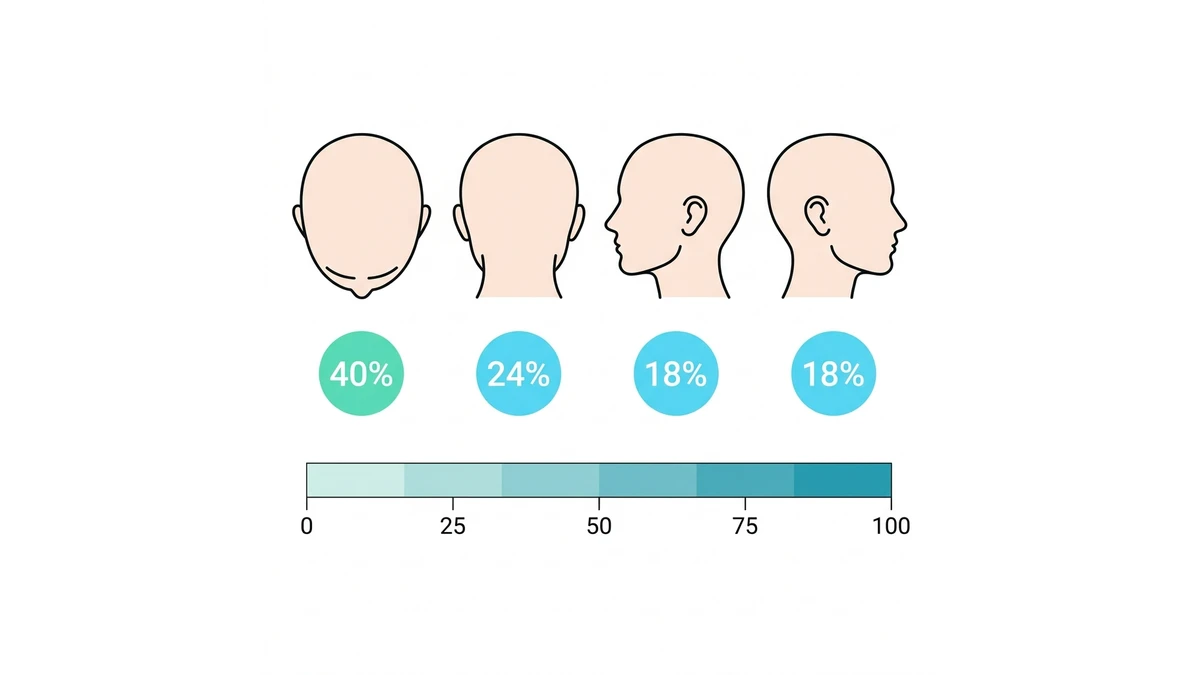
How to use this calculator
- Look at each of the four scalp areas separately — in a mirror, or with a photo taken from above and from behind.
- For each area, estimate what share of it has no hair at all. A quarter of the top bare means 25 for that field.
- Tick any of the warning findings that apply to you.
- Press calculate. The score weights each area by how much scalp surface it represents, so the top counts more than a side.
FAQ
What is the SALT score?
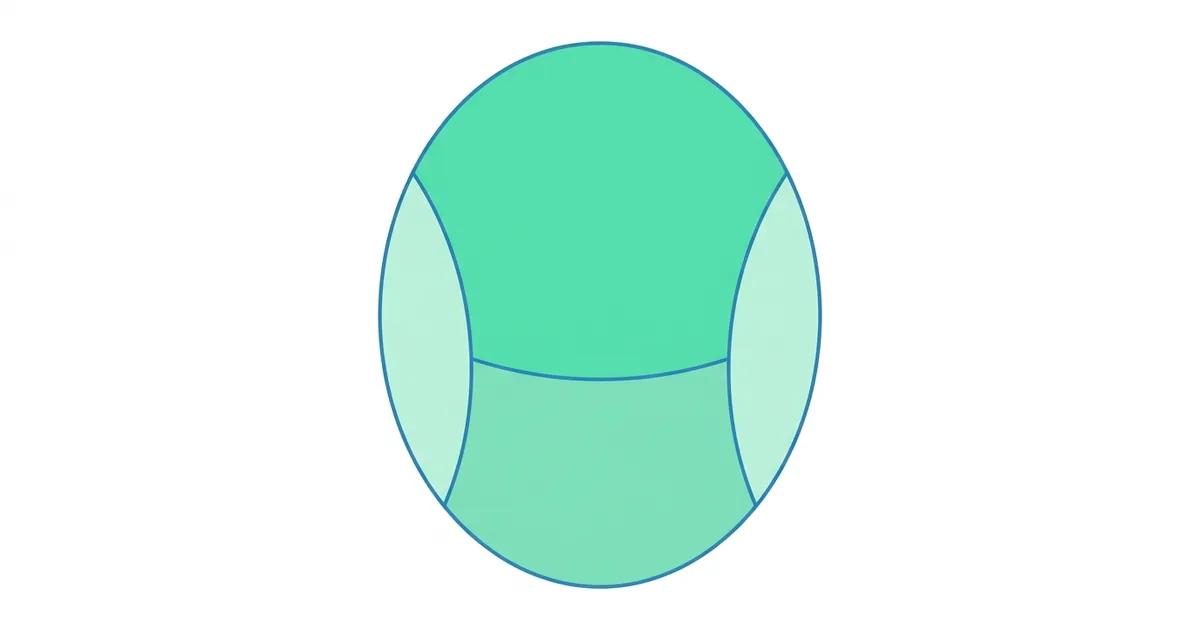
SALT (Severity of ALopecia Tool) measures what percentage of the scalp surface has no hair, from 0 (full hair) to 100 (complete loss). It is calculated by estimating loss in four areas and weighting each by the share of scalp it represents: top 40%, back 24% and 18% for each side.
What do grades S0 to S5 mean?
They are the grades published by Olsen and Hordinsky in 2004: S0 no loss, S1 1-24%, S2 25-49%, S3 50-74%, S4 75-99% and S5 total scalp hair loss.
Does it apply to male or female pattern baldness?
SALT was designed for alopecia areata and is the endpoint used in its clinical trials. Pattern hair loss is described with different scales — Hamilton-Norwood in men and Ludwig in women — which describe the shape of the loss rather than its surface area.
Does a low score mean nothing is wrong?
No. SALT measures extent only. Loss that is small but sudden, patchy, painful, or accompanied by loss of eyebrows and eyelashes can matter more than extensive stable loss, and needs medical assessment.
CalcVita. (2026). SALT Score Calculator — Alopecia Severity. CalcVita. Retrieved September 8, 2026, from https://calcvita.com/en/calculators/alopecia-salt-score
Suggested article
Alopecia areata and the SALT score: how scalp involvement is measured
What alopecia areata is, why dermatologists quantify hair loss with the SALT score instead of eyeballing it, how the four scalp regions are weighted, and what an S0–S5 grade does and does not tell you.
Read the full article →More calculators
Keep exploring helpful tools
Body inflammation
Assess your inflammation risk from diet and lifestyle.
A1C to blood sugar (eAG)
Convert A1C to estimated average glucose using the ADAG formula (ADA 2024).
FINDRISC diabetes risk
10-year type 2 diabetes risk score, no blood draw (Lindström 2003).
Biological age
Discover your real biological age based on lifestyle.