
Calculator gradient alveolo-arterial
Calculează gradientul alveolo-arterial de oxigen dintr-o gazometrie arterială, cu valoarea normală așteptată pentru vârstă, raportul PaO2/FiO2, SpO2/FiO2 și indicele ROX.
Cum se folosește acest calculator
- Ia PaO₂ și PaCO₂ direct din gazometria arterială, în mmHg.
- Introdu FiO₂ pe care o respira pacientul: 21% în aer ambiant sau fracția administrată dacă era pe oxigen.
- Introdu vârsta: gradientul normal se lărgește cu anii, așa că un pacient de 80 de ani nu se compară cu unul de 20.
- Ajustează presiunea barometrică dacă ești peste nivelul mării. Contează: la 2.240 m, aceeași PaO₂ care ar părea anormală la nivelul mării poate fi pe deplin așteptată.
- Citește întâi mecanismul și apoi cifra. Rostul gradientului este să îți spună dacă problema este în plămân.
FAQ
What is the alveolar-arterial gradient?
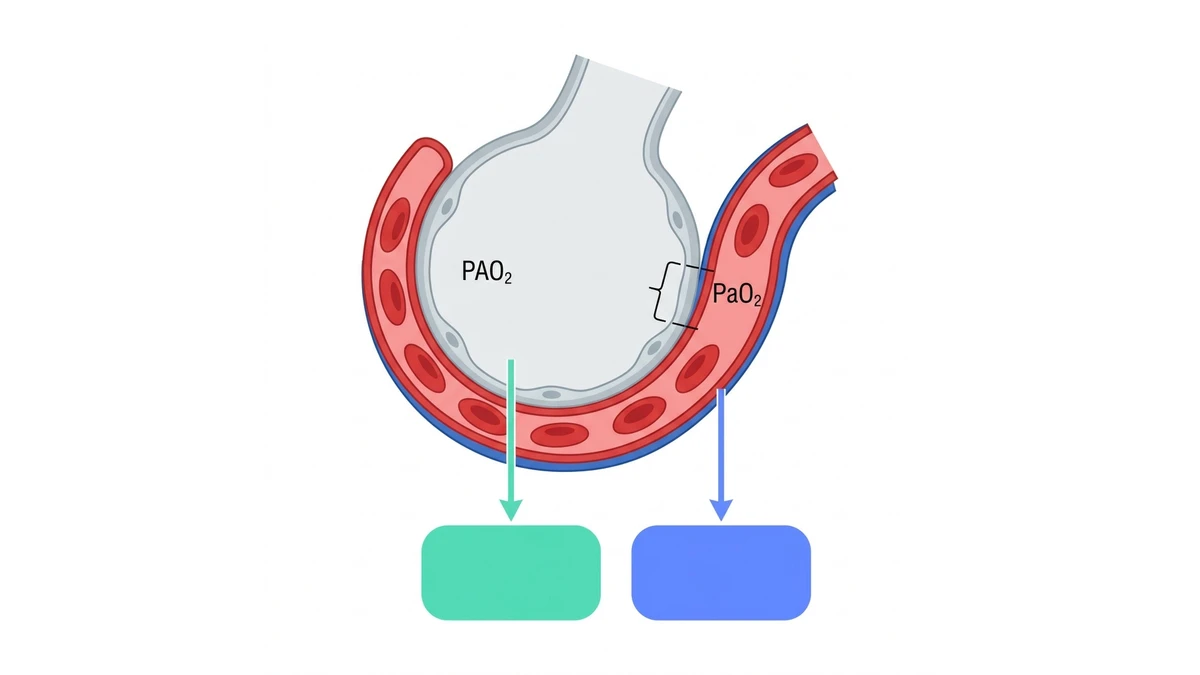
It is the difference between the oxygen tension in the alveolus (PAO₂, from the alveolar gas equation) and the one measured in arterial blood (PaO₂). It quantifies how much oxygen is lost crossing from air into blood.
What is a normal gradient for age?
The most widely used estimate is (age + 10) divided by 4 — about 10 mmHg at 30 years and about 20 mmHg at 70. That is why the gradient is always read with the age in front of it.
Why does the gradient separate the causes of hypoxaemia?
If someone is breathing too little, or the inspired air is oxygen-poor at altitude, alveolus and artery fall together and the gap between them stays normal. If the lung itself is the problem, oxygen does not cross properly and the gap widens.
Why adjust the barometric pressure?
The alveolar gas equation is pressure-dependent. At altitude there is less pressure and PAO₂ is physiologically lower. Leaving 760 mmHg when the blood gas was drawn in Mexico City or Bogotá invents a gradient that is not there.
CalcVita. (2026). Calculator gradient alveolo-arterial. CalcVita. Retrieved 8 septembrie 2026, from https://calcvita.com/ro/calculatoare/gradient-alveolo-arterial

Articol recomandat
Gradientul alveolo-arterial: citirea oxigenării dincolo de valoarea oxigenului
De ce o valoare normală a oxigenului poate ascunde totuși o problemă pulmonară, cum separă ecuația gazului alveolar plămânul de restul și de ce gradientul așteptat crește odată cu vârsta.
Citește articolul complet →Mai multe calculatoare
Continuă să explorezi instrumente utile
eGFR — Funcție renală
RFGe și stadiul BCR cu formula CKD-EPI 2021 (KDIGO 2024).
Clearance creatinină
Estimează CrCl cu ecuația Cockcroft-Gault pentru ajustarea dozelor.
Calciu corectat
Corectați calciul seric în funcție de albumină cu formula Payne (1973).
Tensiune arterială
Clasifică tensiunea arterială conform ghidurilor AHA 2017.