
Body Roundness Index (BRI) Calculator
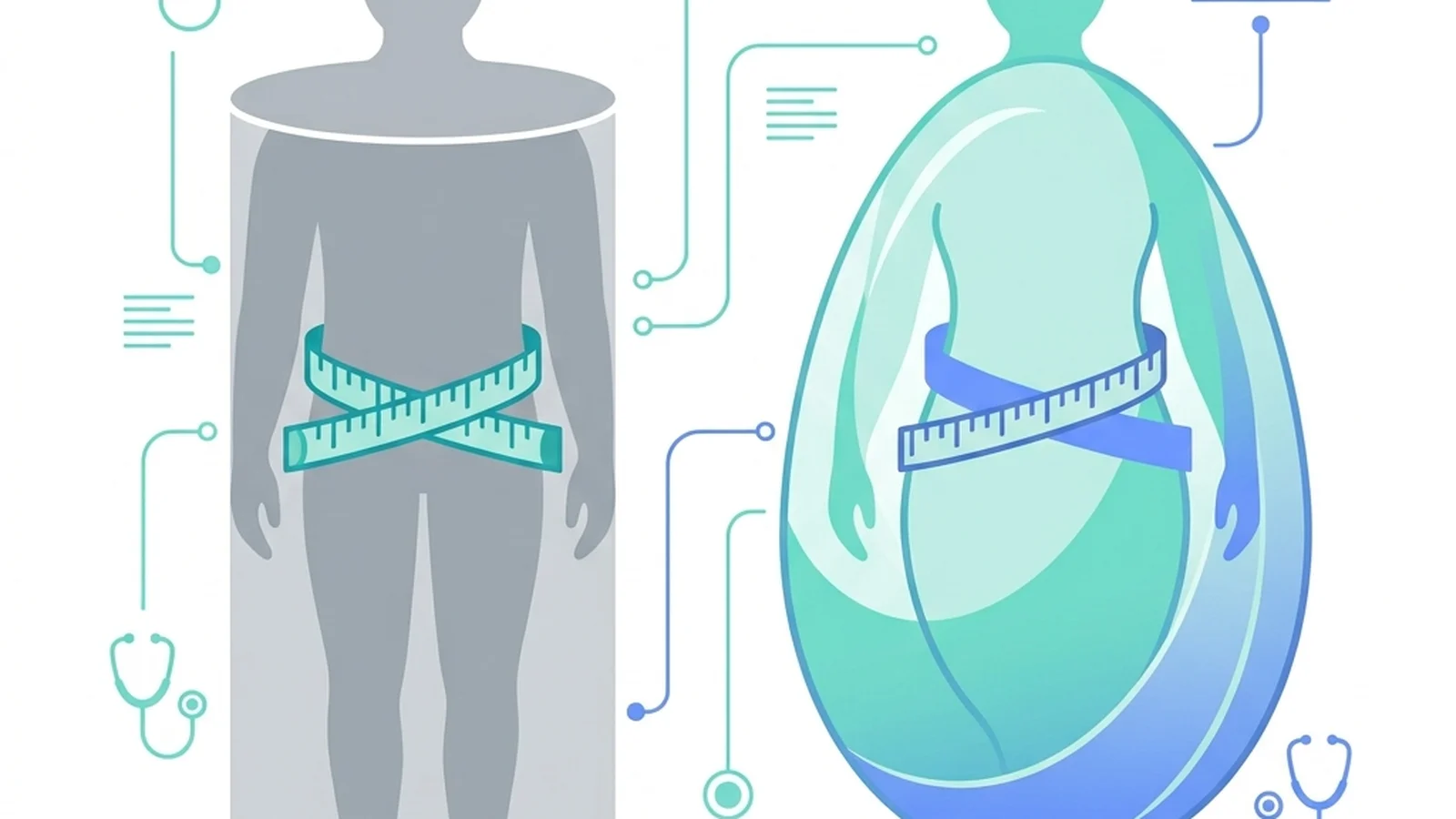
BRI estimates body roundness and central-fat distribution from waist and height using a geometric (egg/ellipse) model — capturing WHERE fat sits, which BMI ignores. A 2024 JAMA study linked high BRI (≥6.9) to up to 49% higher all-cause mortality versus medium BRI. It is an associational indicator, not a diagnosis: there is no universal clinical cut-off, and it complements BMI and waist circumference rather than replacing them. The association is U-shaped: a very low BRI has also been linked to higher all-cause mortality, so a mid-range value is generally most favorable.
Calculate your Body Roundness Index (BRI) from waist circumference and height. A geometric measure of central-fat distribution that BMI ignores — with associational health bands.
CalcVita. (2026). Body Roundness Index (BRI) Calculator. CalcVita. Retrieved October 5, 2026, from https://calcvita.com/en/calculators/body-roundness-index
Key takeaways
- BRI is computed from waist circumference and height alone via a geometric model — no sex or age needed.
- Unlike BMI, it reflects central-fat distribution, i.e. where fat is stored rather than total weight.
- In cohort studies, a high BRI (≥6.9) was associated with up to 49% higher all-cause mortality (JAMA Netw Open, 2024).
- It has no universal clinical cut-off: it is indicative and does not replace a medical assessment.
How to use the Body Roundness Index calculator
Enter your waist circumference and your height, each in cm or inches (they can differ — the calculator converts to a common unit). The tool applies the Body Roundness Index formula and returns a single BRI value plus an associational body-roundness band. BRI is sex-neutral, so no age or sex is required. Measure your waist at the level of the navel after breathing out normally, without pulling the tape tight.
The Body Roundness Index formula explained
BRI = 364.2 − 365.5 × √(1 − (waist / (π × height))²), with waist and height in the same unit. Introduced by Thomas DM et al. in Obesity (2013, 21(11):2264–2271; PMID 23519954), the formula models the body as an ellipse and derives roundness from its eccentricity. Because it is a ratio of waist to height, no weight, sex or age is needed. Values typically span about 1 (very lean) to 16 (very round).
Interpreting your BRI band
There is no universal clinical cut-off for BRI; bands are associational, not diagnostic. Anchored to a large 2024 cohort study: BRI below 4.5 = lower body roundness (a very low BRI has also been linked to higher all-cause mortality, so a mid-range value is generally most favorable); 4.5–6.9 = moderate (near the study’s medium reference of about 5); 6.9 or above = high, associated with higher all-cause mortality in cohort studies. Treat your BRI as one signal that complements — but does not replace — BMI, waist circumference and a clinical assessment.
BRI versus BMI: what each one captures
BMI uses weight and height and cannot tell where fat is stored, so a muscular person and a person with high abdominal fat can share the same BMI. BRI uses waist and height, so it reflects central (visceral) fat distribution — the fat around the organs most strongly linked to metabolic and cardiovascular risk. The indices are complementary: BRI adds body-shape information that BMI alone misses, and neither replaces a medical evaluation.
Scientific References
- Thomas DM, Bredlau C, Bosy-Westphal A, et al. (2013). Relationships between body roundness with body fat and visceral adipose tissue emerging from a new geometrical model. Obesity (Silver Spring) 21(11):2264–2271. PMID: 23519954
- Zhang X, Ma N, Lin Q, et al. (2024). Body Roundness Index and All-Cause Mortality. JAMA Network Open. 2024;7(6):e2415051. PMID: 38837158
- What is the Body Roundness Index (BRI)?
- The Body Roundness Index (BRI) is a measure of body shape that estimates how round versus how slender a body is, using only waist circumference and height. It comes from a geometric model that treats the human body as an ellipse (an egg-like shape): a wider waist relative to height produces a rounder body and a higher BRI. BRI was designed to capture central (abdominal) fat distribution — where fat sits — which body mass index (BMI) cannot detect.
- How is BRI calculated?
- BRI = 364.2 − 365.5 × √(1 − (waist / (π × height))²), with waist circumference and height in the same unit. The term inside the square root is the eccentricity of the ellipse formed by your waist and height. Because it uses a ratio of waist to height, BRI does not need weight, sex or age. Typical values range from about 1 (very lean) to 16 (very round), and the result is usually reported to one decimal place.
- What do the BRI bands mean?
- There is no universal clinical cut-off for BRI, so bands are associational rather than diagnostic. As a practical guide anchored to a large 2024 cohort study: a BRI below 4.5 reflects lower body roundness; roughly 4.5–6.9 is moderate (near the study’s medium reference of about 5); and 6.9 or above is high. A high BRI has been associated with higher all-cause mortality in cohort studies, but the number itself is a risk indicator, not a diagnosis.
- How is BRI different from BMI?
- BMI uses weight and height, so two people with the same BMI can have very different fat distributions. BRI uses waist circumference and height, so it captures central (abdominal) fat — the visceral fat around organs that is most strongly linked to metabolic and cardiovascular risk. Because a very muscular person and a person with high abdominal fat can share a BMI, BRI adds information about body shape that BMI alone misses. The two indices are complementary, not interchangeable.
- Does a high BRI mean I will have health problems?
- No. A high BRI is an associational signal, not a diagnosis. A 2024 study in JAMA Network Open found that people with a high BRI had up to about 49% higher all-cause mortality than those in the medium range, but this is a population-level association across large cohorts — it does not predict any individual’s health. Many factors (fitness, blood pressure, blood sugar, lipids, smoking, genetics) matter alongside body shape. Use BRI as one input among several, not as a verdict.
- How should I measure my waist for BRI?
- Measure your waist circumference with a flexible tape at the level of the navel (or midway between the lowest rib and the top of the hip bone), after breathing out normally, without pulling the tape tight. Keep the tape horizontal all the way around. Measure height without shoes. For consistency, use the same landmarks each time — small differences in where you place the tape change the waist value and therefore the BRI.
Suggested article
Body Roundness Index (BRI): What Your Score Really Means
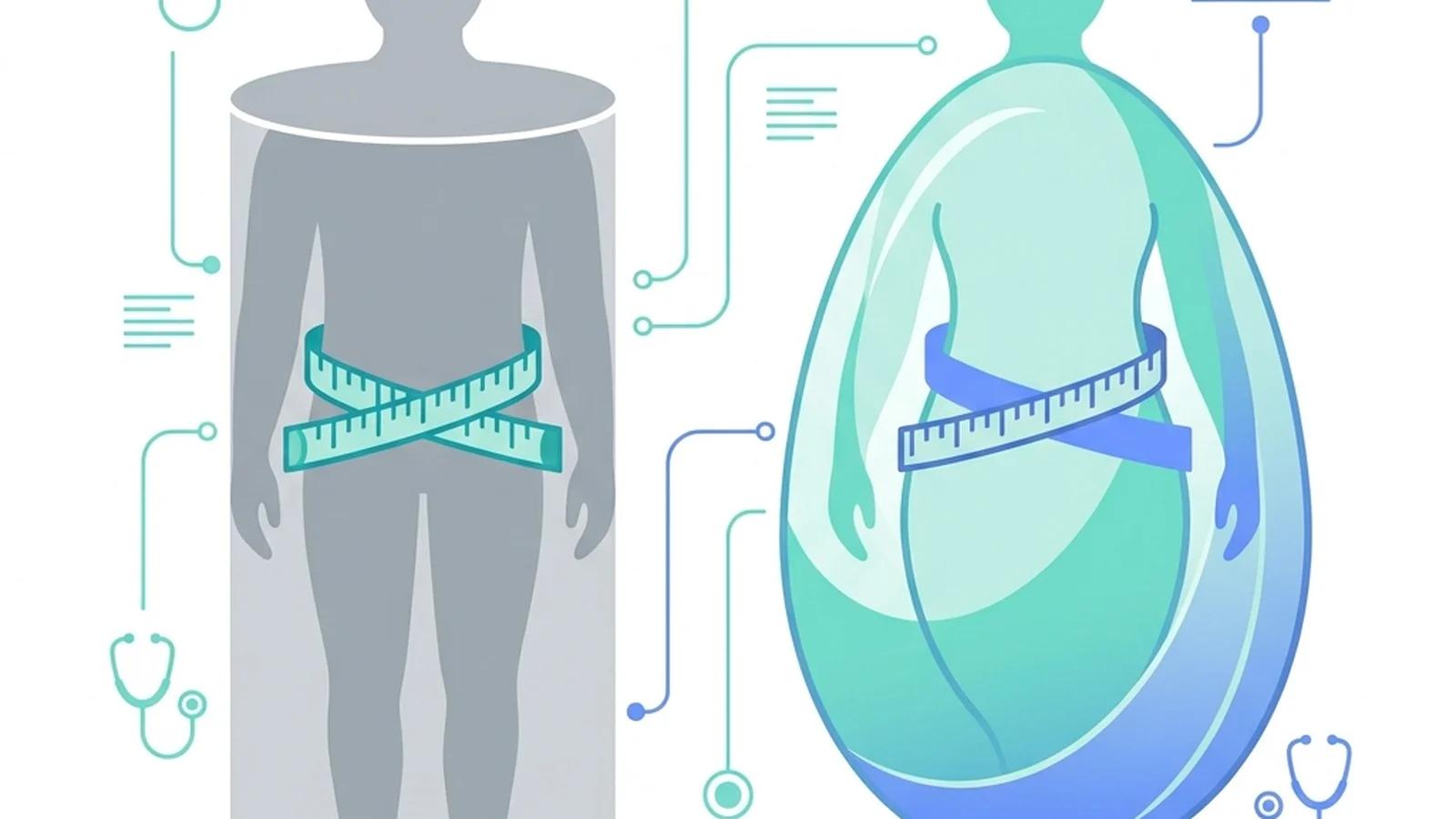
The Body Roundness Index (BRI) estimates central body fat from your height and waist circumference, modeling the body as an ellipse instead of BMI's simple weight-for-height ratio. Learn how BRI is calculated, how to read the bands, what the landmark mortality research found, and where the score falls short.
Read the full article →More calculators
Keep exploring helpful tools
Waist-to-hip ratio
Assess your fat distribution and cardiovascular risk with the waist-to-hip ratio.
Body fat calculator
Estimate body fat % using US Navy or CUN-BAE methods.
BMI calculator
Compute your BMI with WHO ranges and guidance.
Ideal weight calculator
Calculate ideal weight using 4 scientific formulas + WHO range.