Calculate daily water intake by weight, activity, climate and health needs. Personalized recommendation backed by IOM and EFSA guidelines. Free, instant.
CalcVita. (2026). Water Intake Calculator — Daily Needs. CalcVita. Retrieved October 17, 2026, from https://calcvita.com/en/calculators/water-intake
Suggested article
Find your daily water target from your weight, activity, climate and life stage. See what the IOM and EFSA actually recommend, why the 8-glasses rule is a myth, and how to spot dehydration and overhydration early.
Read the full article →This calculator starts from a weight-based estimate of 33 mL per kilogram per day — a common rule of thumb within the usual 30–35 mL/kg range — and treats it as total water, food included. It then adds fixed, approximate amounts for physical activity (+0.35 to +1.0 L/day) and hot climate (+0.5 L/day): sweat losses vary widely from person to person, which is why the ACSM position stand (Sawka et al., 2007) and Kenefick & Cheuvront (2012) advise tailoring fluid replacement to the individual. The extra amounts for pregnancy (+0.3 L) and breastfeeding (+0.7 L) follow EFSA 2010. Because roughly 20% of water comes from food (Popkin et al., Nutrition Reviews 2010), the amount to drink is 80% of the total.
A 50 kg person has very different water needs than a 100 kg person. Weight-based formulas (30-35 mL/kg/day) are more accurate than fixed recommendations like "8 glasses a day," which does not account for body size, muscle mass, or metabolic rate.
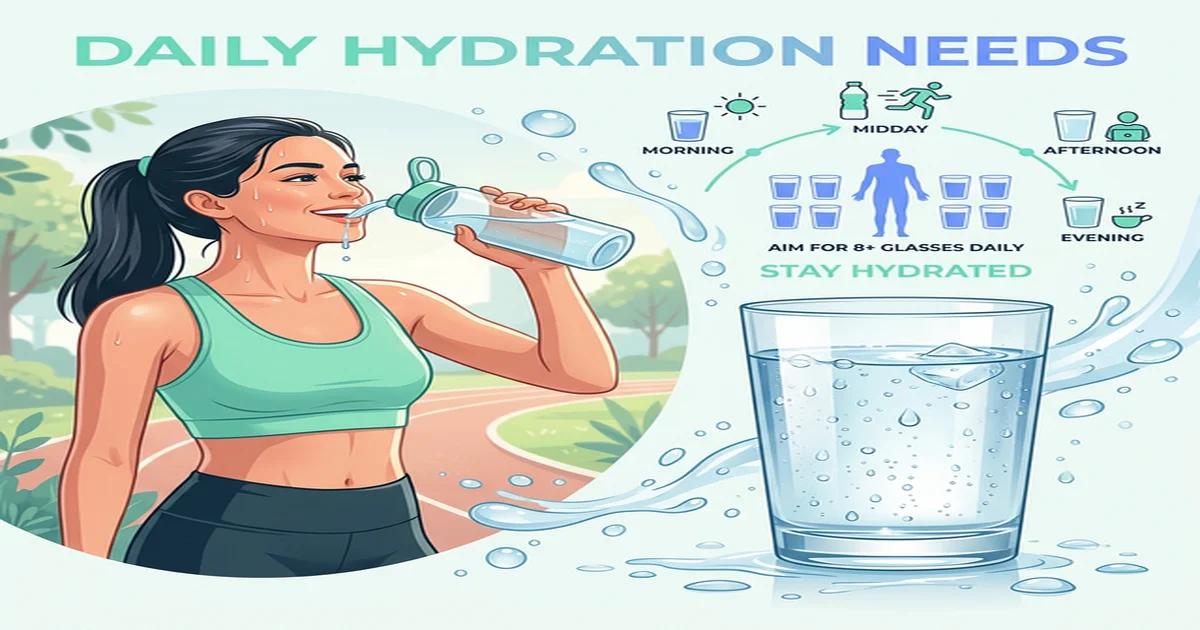
The widely repeated "8 glasses of water per day" advice has no strong scientific basis. It likely originated from a 1945 US Food and Nutrition Board report that suggested 2.5 liters of total water per day — but noted that most of this comes from food. Your actual needs depend on weight, activity, climate, and health status.
More calculators
