Macro Calculator — Macronutrients

Calculate your ideal protein, fat, and carb intake based on your goals. Free macro calculator for weight loss, muscle gain, or maintenance.

Medically reviewed by Dr. Ivan IbáñezNº Col. 17/05487Mar 8, 2026

Enter your data to calculate your macros.

Fill in the form and click "Calculate Macros" to see your personalised macro plan.

CalcVita. (2026). Macro Calculator — Macronutrients. CalcVita. Retrieved June 3, 2026, from https://calcvita.com/en/calculators/macros
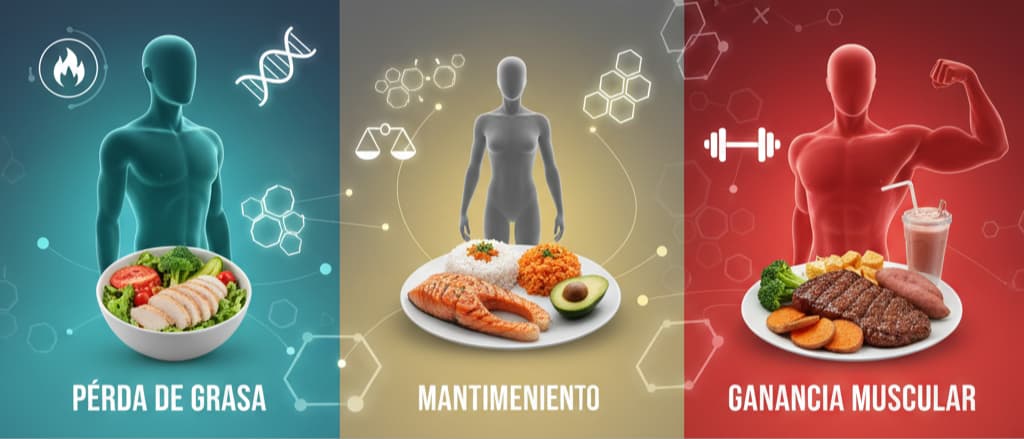
Macro distribution for real life goals

Suggested article

Macro distribution for real life goals

See how many grams of protein, fat and carbohydrates you need to maintain muscle, support hormones and fuel training.

Read the full article

Guide to planning your macros

This tool helps you distribute protein, carbohydrates and fat based on daily calories or grams per bodyweight.

Available methods

  • Calorie percentage Define your daily calorie target and assign percentages for protein, carbs and fat (adding up to 100%).
  • Grams per bodyweight Enter grams per kilogram (or per pound) of protein, carbohydrates and fat; the tool returns the resulting calories.

Key fields

  • Daily calories Match your adjusted TDEE for the goal (deficit, maintenance, surplus).
  • Weight Use your current bodyweight to estimate grams per kilogram (or per pound).
  • Distribution Adjust percentages or ratios according to training, hunger and digestive tolerance.

Example macro splits

  • Calorie deficit: you might use a rough split of 25‑30% protein, 35‑45% carbohydrates and 25‑30% fat, prioritising satiety and performance.
  • Maintenance: many people do well around 20‑25% protein, 40‑50% carbohydrates and 25‑30% fat, adjusting for personal preference.
  • Muscle‑gain phase: you can shift protein slightly towards 1.4‑2.0 g/kg and increase carbohydrates to support higher training volume.

Interprétation

The results table displays grams per macro, calories and percentages. Check they align with your goal and adjust weekly based on progress.

How to adjust week by week

  • If body weight drops faster than expected (>1% per week), consider slightly increasing carbs or fat.
  • If nothing changes after 3‑4 weeks, review adherence, daily steps and consider reducing calories by 5‑10%.
  • Prioritise sleep and stress management: both influence appetite, performance and your ability to stick to the plan.

Macronutrient roles in health

Each macronutrient fulfils specific metabolic functions that determine how the body obtains energy, repairs tissues and regulates hormonal processes.

  • Protein (~4 kcal/g): essential for tissue repair and synthesis, immune function and satiety. The amino acids that compose proteins serve as precursors for enzymes, antibodies and neurotransmitters.
  • Carbohydrates (~4 kcal/g): the body's primary energy source and the brain's preferred fuel. Glucose derived from carbohydrates powers muscular activity and cognitive functions.
  • Fats (~9 kcal/g): required for hormone synthesis (including sex hormones and cortisol), absorption of fat‑soluble vitamins (A, D, E, K) and cell membrane integrity.

Institute of Medicine. Dietary Reference Intakes for Energy, Carbohydrate, Fiber, Fat, Fatty Acids, Cholesterol, Protein, and Amino Acids. National Academies Press, 2005.

Protein requirements by population

  • The Recommended Dietary Allowance (RDA) for sedentary adults is 0.8 g/kg of body weight, sufficient to prevent deficiencies in inactive individuals.
  • For active individuals, research supports a range of 1.2‑1.6 g/kg to optimise muscle recovery and performance.
  • Athletes seeking muscle gain may benefit from 1.6‑2.2 g/kg, as higher intake stimulates muscle protein synthesis.
  • In older adults, an intake of 1.0‑1.2 g/kg helps prevent sarcopenia (the progressive loss of muscle mass and strength associated with ageing).

Phillips SM, Van Loon LJ. "Dietary protein for athletes: from requirements to optimum adaptation." J Sports Sci 2011;29(sup1):S29‑S38.

Bauer J et al. "Evidence‑based recommendations for optimal dietary protein intake in older people." J Am Med Dir Assoc 2013;14:542‑559.

Adjusting macros for your goals

  • Caloric deficit for fat loss: a deficit of roughly 500 kcal/day produces a loss of ~0.5 kg per week. This is the recommended rate to minimise muscle mass loss.
  • Caloric surplus for muscle gain: a moderate surplus of 250‑500 kcal/day provides enough energy for new muscle tissue synthesis without excessive fat accumulation.
  • Maintenance: matching caloric intake to total daily energy expenditure (TDEE) to maintain current body composition.

Note: during a caloric deficit, protein should remain high (1.6‑2.2 g/kg) to preserve lean mass, even if carbohydrates or fats are reduced.

Helms ER et al. "A systematic review of dietary protein during caloric restriction in resistance trained lean athletes." Int J Sport Nutr Exerc Metab 2014;24:127‑138.

Practical tips

  • Prioritise adequate protein (1.6‑2.2 g/kg) in a calorie deficit to preserve lean mass.
  • Raise carbohydrates on intense training days and keep healthy fats ≥0.8 g/kg.

More calculators

Keep exploring helpful tools

Browse all