
Corrected Calcium Calculator (Albumin, Payne)
Calculate albumin-corrected serum calcium with the validated Payne formula. Detect hypocalcemia or hypercalcemia masked by abnormal albumin.
Corrected calcium adjusts a total serum calcium reading for low albumin using the usual adaptation of the Payne adjustment (BMJ 1973): corrected Ca (mg/dL) = measured Ca + 0.8 × (4.0 − albumin g/dL). Each 1 g/dL drop in albumin below 4.0 hides about 0.8 mg/dL of calcium. The correction is a screening aid only — when a clinical decision depends on the exact value, measure ionized calcium directly.
Key takeaways
- Usual adaptation of the Payne adjustment (the 1973 original was Ca − albumin + 4.0): Corrected Ca = measured Ca + 0.8 × (4.0 − albumin in g/dL). Normal adult range is 8.5–10.5 mg/dL (2.12–2.62 mmol/L).
- Use it to screen calcium status when albumin is low (malnutrition, liver disease, nephrotic syndrome) and direct ionized calcium is unavailable.
- It is unreliable in critical illness: in surgical ICU patients the formula misclassified calcium status in 38% of cases (Byrnes, Am J Surg 2005). Measure ionized calcium when accuracy matters.
- A 2021 review in the “Things We Do for No Reason” series (Kenny, J Hosp Med) argues that routinely correcting calcium for albumin adds little and can mislead — interpret corrected values with caution, especially in hypoalbuminemia, and measure ionized calcium when it matters.
CalcVita. (2026). Corrected Calcium Calculator (Albumin, Payne). CalcVita. Retrieved October 17, 2026, from https://calcvita.com/en/calculators/corrected-calcium
How to use the corrected calcium calculator
Enter the total serum calcium from your blood test (in mg/dL or mmol/L) and the serum albumin level (in g/dL or g/L). The calculator applies the Payne albumin-correction formula to estimate the true (albumin-adjusted) calcium. This is especially useful when albumin is abnormal — both hypoalbuminemia and hyperalbuminemia distort the total calcium reading.
The albumin-correction formula explained
Corrected Ca (mg/dL) = Measured Ca (mg/dL) + 0.8 × (4.0 − Albumin [g/dL]). This is the usual adaptation of the adjustment published by Payne RB et al. in BMJ (1973), whose original equation was Ca − albumin + 4.0 (a factor of 1.0, derived from 200 specimens in their laboratory). The constant 4.0 g/dL is the reference (normal) albumin. For SI: Corrected Ca (mmol/L) = Measured Ca (mmol/L) + 0.02 × (40 − Albumin [g/L]). Note: the correction factor 0.8 mg/dL per g/dL albumin was derived from observational data and has wide individual variability.
Clinical applications
This correction is essential whenever albumin is abnormal. In hospitalized patients, hypoalbuminemia (albumin < 3.5 g/dL) is common due to inflammation, malnutrition, or liver disease. Without correction, hypercalcemia from malignancy or hyperparathyroidism may be missed. Conversely, apparent hypocalcemia in a patient with normal ionized calcium (e.g., post-transfusion with citrate) does not require treatment. Always interpret corrected calcium alongside clinical symptoms.
Limitations of the formula
The Payne adjustment was derived from 200 routine laboratory specimens (liver function tests). It performs poorly in: ICU patients (acidosis and altered protein binding), severe hypoalbuminemia (albumin < 2 g/dL), paraproteinemias (myeloma, MGUS), patients on calcium chelators (citrate, EDTA), and with non-albumin protein abnormalities. In these patients, direct ionized calcium measurement is mandatory.
Scientific References
- Payne RB, Little AJ, Williams RB, Milner JR. (1973). Interpretation of serum calcium in patients with abnormal serum proteins. BMJ 4(5893):643–646. PMID: 4758544
- Bushinsky DA, Monk RD. (1998). Electrolyte quintet: Calcium. Lancet 352(9124):306–311. PMID: 9690425
- Ladenson JH, Lewis JW, Boyd JC. (1978). Failure of total calcium corrected for protein, albumin, and pH to correctly assess free calcium status. J Clin Endocrinol Metab 46(6):986–993. PMID: 45478
- Bilezikian JP, Bandeira L, Khan A, Cusano NE. (2018). Hyperparathyroidism. Lancet 391(10116):168–178. PMID: 28923463
- National Kidney Foundation. (2003). K/DOQI Clinical Practice Guidelines for Bone Metabolism and Disease in Chronic Kidney Disease. Am J Kidney Dis 42(4 Suppl 3):S1-201. PMID: 14520607
- Why do we need to correct calcium for albumin?
- About 40–45% of serum calcium is bound to albumin. Standard laboratory tests measure total calcium, which includes both protein-bound and free (ionized) calcium. When albumin is low (hypoalbuminemia), total calcium appears falsely low even though free ionized calcium — the physiologically active form — may be normal. Conversely, high albumin can mask hypercalcemia. Correcting for albumin gives a more accurate estimate of ionized calcium without requiring a direct ionized calcium assay.
- What is the corrected calcium formula?
- The albumin-corrected calcium formula (Payne, 1973) is: Corrected Ca (mg/dL) = Measured Ca (mg/dL) + 0.8 × (4.0 − Albumin [g/dL]). The constant 4.0 g/dL represents normal serum albumin. The factor 0.8 means that for every 1 g/dL drop in albumin below normal, add 0.8 mg/dL to the measured calcium. For SI units: Corrected Ca (mmol/L) = Measured Ca (mmol/L) + 0.02 × (40 − Albumin [g/L]).
- What are normal corrected calcium levels?
- Normal corrected calcium is 8.5–10.5 mg/dL (2.12–2.62 mmol/L). Values below 8.5 mg/dL indicate hypocalcemia; values above 10.5 mg/dL indicate hypercalcemia. Mild hypercalcemia is typically 10.5–12.0 mg/dL, moderate 12.0–14.0 mg/dL, and severe above 14.0 mg/dL. Different laboratories may use slightly different reference ranges (some use 8.4–10.2 mg/dL), so always interpret results in the context of your laboratory's normal range.
- What causes low corrected calcium (hypocalcemia)?
- Common causes of true hypocalcemia (low corrected calcium) include: hypoparathyroidism (often post-surgical), vitamin D deficiency or malabsorption, chronic kidney disease (impaired vitamin D activation and phosphate retention), hypomagnesemia (magnesium is required for PTH release), acute pancreatitis (calcium sequestration by saponification), and medications (bisphosphonates, cinacalcet, foscarnet). Symptoms range from asymptomatic to paresthesias, tetany, laryngospasm, and seizures at severe levels.
- What causes high corrected calcium (hypercalcemia)?
- The most common causes of hypercalcemia are primary hyperparathyroidism (most common in outpatients; usually mild) and malignancy (solid tumors with PTHrP secretion, bone metastases, or multiple myeloma). Other causes include sarcoidosis and granulomatous diseases, vitamin D toxicity, prolonged immobilization, milk-alkali syndrome, and thiazide diuretics. Hypercalcemia from cancer tends to be more severe and symptomatic ("bones, groans, stones, and psychic moans").
- When is ionized calcium preferred over corrected calcium?
- The albumin correction formula has significant limitations: the original was derived from 200 laboratory specimens sent for liver function tests, and it is known to be inaccurate in critically ill patients, those with severe hypoalbuminemia (albumin < 2 g/dL), acid-base disturbances, and patients receiving calcium-chelating agents (citrate, EDTA). In these settings, direct measurement of ionized calcium (Ca²⁺) by blood gas analysis is preferred. Ionized calcium is also more accurate in patients with paraproteinemias (e.g., multiple myeloma), where abnormal proteins can alter calcium binding unpredictably.
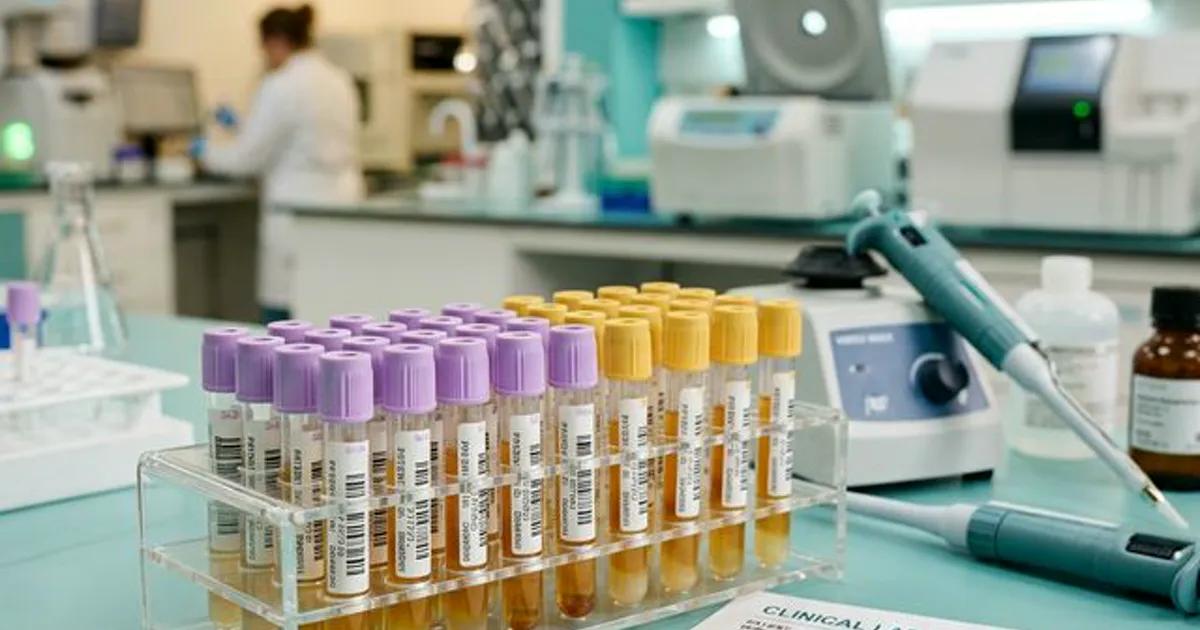
Suggested article
Corrected Calcium: Albumin-Adjusted Serum Calcium Explained
Serum calcium measurements can be misleading when albumin levels are abnormal. The Payne albumin-correction formula (BMJ 1973) reveals the true physiological calcium level — essential for diagnosing hypocalcemia and hypercalcemia in hospitalized patients.
Read the full article →More calculators
Keep exploring helpful tools
A-a Gradient
Assesses oxygenation with the alveolar gas equation and the age-expected value.
eGFR — Kidney function
Glomerular filtration rate and CKD stage with CKD-EPI 2021 (KDIGO 2024).
Creatinine clearance
Estimate CrCl with the Cockcroft-Gault equation for drug dosing.
Blood pressure
Classify your blood pressure using AHA 2017 guidelines.