
ASCVD Risk Calculator — 10-Year Risk
Compute your 10-year cardiovascular risk with the Pooled Cohort Equations (ACC/AHA 2013). See the impact of quitting smoking, treating BP and lowering cholesterol.
CalcVita. (2026). ASCVD Risk Calculator — 10-Year Risk. CalcVita. Retrieved October 2, 2026, from https://calcvita.com/en/calculators/ascvd-risk
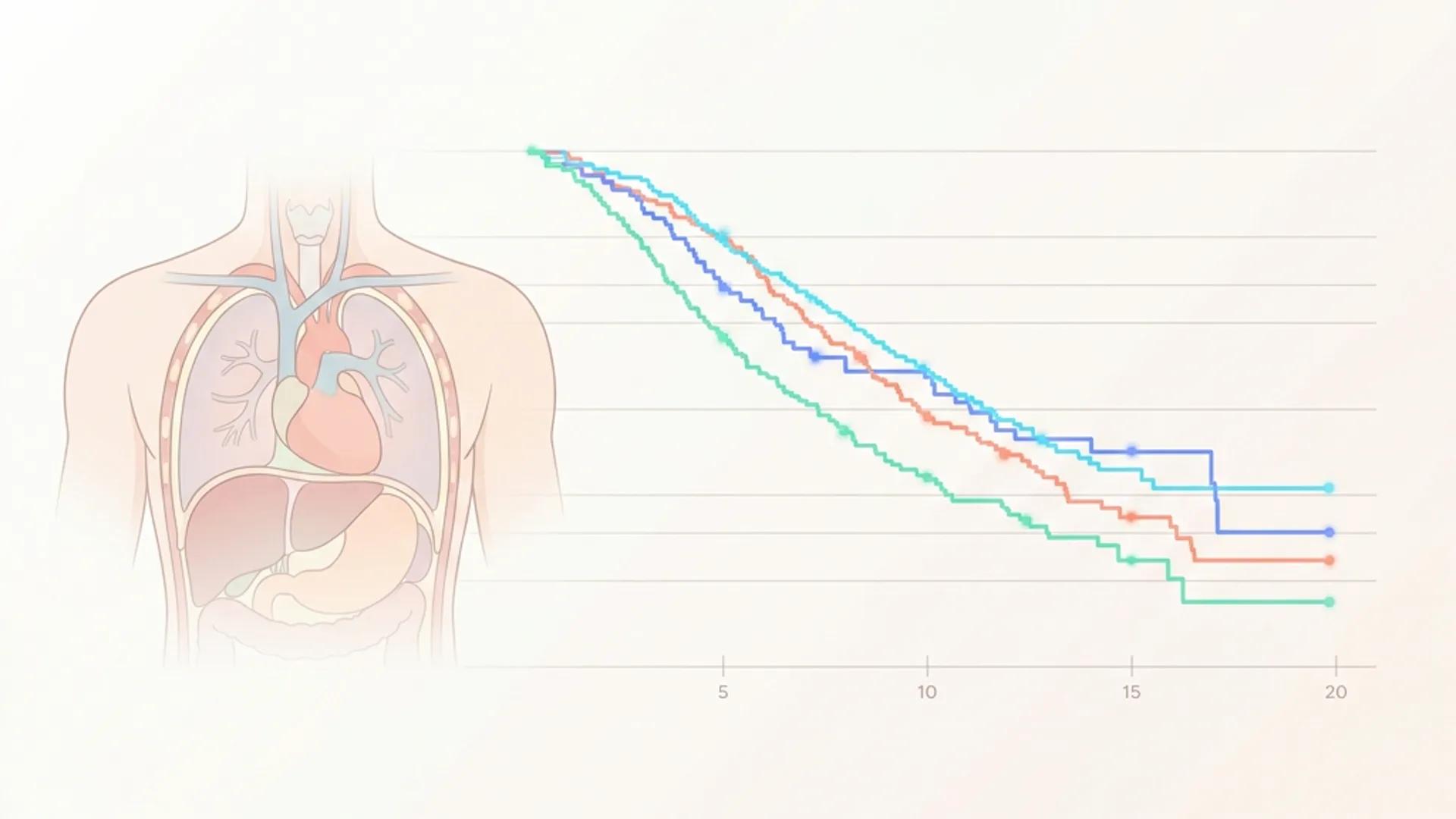
Suggested article
Inside the ASCVD Pooled Cohort Equations: How the Calc Actually Works
Where the numbers come from, why race appears in the equation, and what the 'What if I…?' comparator really computes. A five-minute look under the hood.
Read the full article →How this calculator works
Your cardiovascular risk is not a hunch — it's an estimable probability. This calculator applies the Pooled Cohort Equations validated by the American College of Cardiology / American Heart Association on cohorts of over 24,000 followed for years. You get a number and, more importantly, a clear picture of which modifiable factors move it.
Formula and origin
We use the equations published by Goff et al. in Circulation (2014) derived from the ARIC, CHS, CARDIA and Framingham cohorts. There are four coefficient sets (White female, African American female, White male, African American male). The model combines age, sex, race, total cholesterol, HDL, systolic blood pressure, BP treatment, diabetes and current smoking status. The race input is statistical — it reflects the original cohorts, not biology — and there is documented controversy that we address below.
Risk categories (ACC/AHA 2019)
- Low (<5%): Lifestyle focus; reassess in 4-6 years. No statin indication.
- Borderline (5–7.5%): Consider risk enhancers (family history, hsCRP, coronary artery calcium score). Shared decision with your physician.
- Intermediate (7.5–20%): Statin discussion recommended. Coronary calcium score can refine the decision if uncertain.
- High (≥20%): Statin therapy recommended. Aggressive lifestyle and risk-factor modification.
Why we ask about race (and its limitations)
The original equations were derived from predominantly White and African American cohorts, so the race coefficient is a statistical correction, not biological. In Hispanic, Asian, or other populations the PCE can over- or underestimate risk according to a peer-reviewed re-analysis published in Annals of Internal Medicine — see Yadlowsky et al. 2018, Ann Intern Med.
How to lower your risk (evidence-based)
- Quit smoking: Cuts cardiovascular risk ~50% within 1-2 years (immediate impact on the equations). — Arnett 2019, AHA
- Control blood pressure: Lowering systolic by 10 mmHg reduces major CV events ~20%. — Whelton 2017
- Lower LDL by ~30 mg/dL: Relative event reduction ~22% (lifestyle + statin if indicated). — Stone 2014
- Aerobic physical activity: 150 min/week moderate intensity reduces CV mortality ~30%. — Arnett 2019
- Mediterranean or DASH diet: Independent CV risk reduction even with stable LDL. — Arnett 2019
Scientific sources
- Goff DC Jr et al. (2014). 2013 ACC/AHA Guideline on the Assessment of Cardiovascular Risk. Circulation. PMID 24222018
- Arnett DK et al. (2019). 2019 ACC/AHA Guideline on the Primary Prevention of Cardiovascular Disease. Circulation. PMID 30879355
- Grundy SM et al. (2018). 2018 AHA/ACC/AACVPR/AAPA/ABC/ACPM/ADA/AGS/APhA/ASPC/NLA/PCNA Guideline on the Management of Blood Cholesterol. Circulation. PMID 30586774
- Stone NJ et al. (2014). 2013 ACC/AHA Guideline on the Treatment of Blood Cholesterol to Reduce ASCVD Risk in Adults. Circulation. PMID 24222016
- Whelton PK et al. (2017). 2017 ACC/AHA/AAPA/ABC/ACPM/AGS/APhA/ASH/ASPC/NMA/PCNA Guideline for High Blood Pressure in Adults. Hypertension. PMID 29133356
- Yadlowsky S et al. (2018). Clinical Implications of Revised Pooled Cohort Equations for Estimating ASCVD Risk. Ann Intern Med. PMID 29868850
Frequently asked questions
- What is the ASCVD risk score?
- The ASCVD (Atherosclerotic Cardiovascular Disease) risk score is a 10-year probability estimate of having a heart attack or stroke. It uses the Pooled Cohort Equations developed by the American College of Cardiology (ACC) and American Heart Association (AHA) in 2013, validated on cohorts of over 24,000 adults. Inputs include age, sex, race, total cholesterol, HDL, systolic blood pressure, BP treatment status, diabetes and smoking. The result is expressed as a percentage — for example, 8% means an 8 in 100 chance of a major cardiovascular event in the next 10 years.
- What is a high 10-year cardiovascular risk?
- Per ACC/AHA 2019 guidelines: under 5% is low risk, 5–7.5% borderline, 7.5–20% intermediate, and 20% or higher is high risk. Statin therapy is generally recommended for intermediate and high risk. Borderline cases may benefit from risk enhancers like coronary artery calcium scoring, family history of premature CVD, or hsCRP testing to refine the decision.
- How is ASCVD different from the Framingham Risk Score?
- Framingham (1998) was derived from a single, predominantly White New England cohort and only estimated coronary heart disease risk. ASCVD/Pooled Cohort Equations (2013) added stroke risk, included African American cohorts (ARIC, CHS, CARDIA, Framingham combined), and is the current standard endorsed by ACC/AHA. Studies show Framingham overestimates risk in modern populations; ASCVD is better calibrated, though it can still over- or underestimate in Hispanic and Asian populations (Yadlowsky 2018).
- Can I use this calculator if I am under 40 or over 79?
- The Pooled Cohort Equations were validated for adults aged 40–79. Under 40, the absolute 10-year risk is almost always low, but lifetime risk may be elevated — discuss long-term risk with your doctor. Over 79, the equations have not been validated and may over- or underestimate risk; clinical judgment and frailty assessment become more important than a score.
- How accurate are the Pooled Cohort Equations?
- The PCE are well calibrated for non-Hispanic White and African American adults in the US. In a 2018 re-analysis using modern cohorts (REGARDS, MESA, JHS, Annals of Internal Medicine, Yadlowsky et al., PMID 29868850), the equations were revised because they overestimated risk in some contemporary populations. The calculator should be used as a discussion starter with a clinician, not as a stand-alone diagnostic tool — always combine with family history, lipid trends and lifestyle context.
- How can I lower my ASCVD risk?
- The evidence-based factors with the largest effect are: quitting smoking (cuts CV risk ~50% within 1–2 years), lowering systolic BP by 10 mmHg (reduces major events ~20%, Whelton 2017), reducing LDL cholesterol by ~30 mg/dL through lifestyle and statin if indicated (~22% event reduction, Stone 2014), 150 min/week of moderate aerobic activity (~30% CV mortality reduction), and Mediterranean or DASH diet patterns (independent CV protection). Lifestyle changes alone can move a person from intermediate to borderline risk in 6–12 months.
More calculators
Keep exploring helpful tools
PREVENT Risk Calculator (AHA)
The successor to ASCVD (AHA 2023): 10- and 30-year risk with kidney function, no race.
Blood pressure
Classify your blood pressure using AHA 2017 guidelines.
Cholesterol ratio
TC/HDL, LDL/HDL and non-HDL ratios with AHA/ACC 2018 classification.
A1C to blood sugar (eAG)
Convert A1C to estimated average glucose using the ADAG formula (ADA 2024).