
GLP-1 / Ozempic Weight-Loss Projection Calculator
This tool projects your weight by applying the MEAN loss seen in the pivotal clinical trials: semaglutide 2.4 mg (Wegovy) reached −14.9% of body weight at week 68, and tirzepatide (Zepbound/Mounjaro) reached −15.0%, −19.5% and −20.9% (5, 10 and 15 mg) at week 72. It is an EDUCATIONAL estimate of the trial average — NOT a prediction for you, NOT medical advice, and NOT dosing guidance. Individual results vary widely; these are trial means with a lifestyle intervention and dose titration. These are prescription medicines with side effects — only a doctor can prescribe them. Weight regain is common after stopping.
Estimate average weight loss on semaglutide (Wegovy) or tirzepatide (Zepbound/Mounjaro) using clinical-trial means. Educational projection — not medical advice.
CalcVita. (2026). GLP-1 / Ozempic Weight-Loss Projection Calculator. CalcVita. Retrieved October 5, 2026, from https://calcvita.com/en/calculators/glp1-weight-loss
Key takeaways
- It shows the trial average, not your result: individual response varies widely.
- Semaglutide 2.4 mg: −14.9% at week 68 (placebo −2.4%). Tirzepatide: up to −20.9% at week 72 (placebo −3.1%).
- This is not medical advice or dosing guidance — only a doctor can prescribe or adjust treatment.
- Weight regain is common after stopping (the STEP 1 extension found participants regained about two-thirds of the lost weight within a year of discontinuation).
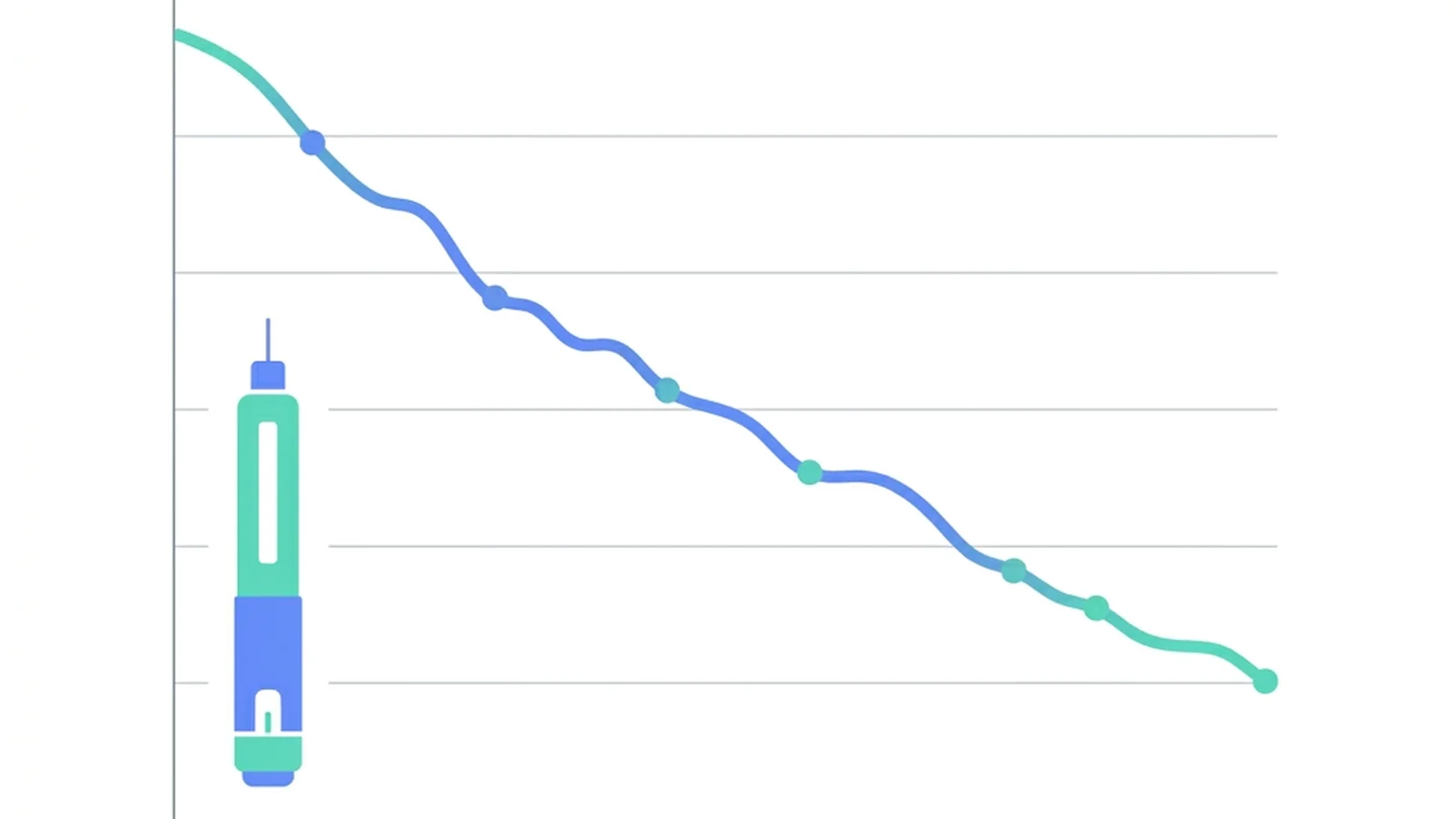
How to use the GLP-1 weight-loss projection
Enter your current weight (kg or lb) and choose a medication and dose. The calculator multiplies your weight by the mean percentage weight loss reported in the pivotal clinical trials to project an average endpoint weight. This is an educational estimate of the trial average, not a prediction for you — your individual result may be higher or lower, and only a doctor can prescribe or advise on these medicines.
How the projection is calculated
Projected weight = current weight × (1 − mean % loss). For semaglutide 2.4 mg the mean loss is 14.9% at week 68; for tirzepatide it is 15.0% (5 mg), 19.5% (10 mg) and 20.9% (15 mg) at week 72. The tool also shows the placebo + lifestyle comparison from each trial (−2.4% and −3.1%). It applies a single group-average percentage; it does not model your metabolism, adherence, side effects or dose titration over time.
What the clinical trials showed
STEP 1 (Wilding 2021, NEJM) randomized 1,961 adults with overweight or obesity to semaglutide 2.4 mg or placebo, both with lifestyle intervention; mean weight change was −14.9% vs −2.4% at week 68. SURMOUNT-1 (Jastreboff 2022, NEJM) randomized 2,539 adults to tirzepatide 5/10/15 mg or placebo; mean weight change was −15.0%, −19.5% and −20.9% vs −3.1% at week 72. Both used treatment-regimen estimands and included structured lifestyle support.
Why individual results vary
These are averages of large groups. In both trials the spread around the mean was wide: some participants lost more than 25% of their weight, while others lost little or discontinued due to side effects. Response depends on adherence, tolerance to gradual dose escalation, diet and activity, other medications and individual biology. Treat the projected number as background context, never as a personal target.
Weight regain after stopping
These medicines are generally used long term. In the STEP 1 extension (Wilding 2022, Diabetes Obes Metab), participants regained about two-thirds of the lost weight within a year of stopping semaglutide, and cardiometabolic improvements largely reversed. Any decision to start, continue or stop treatment should be made with a doctor.
Scientific References
- Wilding JPH, Batterham RL, Calanna S, et al. (2021). Once-Weekly Semaglutide in Adults with Overweight or Obesity. N Engl J Med 384(11):989–1002. PMID: 33567185
- Jastreboff AM, Aronne LJ, Ahmad NN, et al. (2022). Tirzepatide Once Weekly for the Treatment of Obesity. N Engl J Med 387(3):205–216. PMID: 35658024
- Wilding JPH, Batterham RL, Davies M, et al. (2022). Weight regain and cardiometabolic effects after withdrawal of semaglutide: the STEP 1 trial extension. Diabetes Obes Metab 24(8):1553–1564. PMID: 35441470
- How much weight is lost on Ozempic, Wegovy or Mounjaro?
- In the pivotal trials, semaglutide 2.4 mg (Wegovy) produced a mean loss of 14.9% of body weight at week 68, versus 2.4% on placebo (Wilding 2021, STEP 1). Tirzepatide (Zepbound/Mounjaro) produced mean losses of 15.0% (5 mg), 19.5% (10 mg) and 20.9% (15 mg) at week 72, versus 3.1% on placebo (Jastreboff 2022, SURMOUNT-1). This calculator applies those averages to your weight. These are group averages with lifestyle support and dose titration — your own result may be higher or lower.
- Is this calculator a prediction of my personal results?
- No. This is an educational projection of the average result seen in clinical trials, not a prediction for you. Individual responses vary widely: in the trials some people lost far more than the average and others lost little. The numbers reflect the full trial duration (68 or 72 weeks), gradual dose escalation, and a structured lifestyle programme. It is not medical advice and not dosing guidance — only a doctor can prescribe these medicines or advise on whether they are right for you.
- Will I regain the weight if I stop the medication?
- Weight regain is common after stopping. In the STEP 1 extension study, participants regained about two-thirds of the weight they had lost within a year of discontinuing semaglutide, and much of the improvement in cardiometabolic markers reversed. GLP-1 and GLP-1/GIP medicines are generally used as long-term treatments; stopping them typically leads to partial or full regain unless other changes are sustained. Discuss any changes to treatment with your doctor.
- What is the difference between semaglutide and tirzepatide?
- Semaglutide (Ozempic, Wegovy) is a GLP-1 receptor agonist. Tirzepatide (Mounjaro, Zepbound) is a dual GIP and GLP-1 receptor agonist. In their respective trials, tirzepatide produced larger average weight loss (up to 20.9% at 15 mg over 72 weeks) than semaglutide 2.4 mg (14.9% over 68 weeks). The trials were separate, so head-to-head numbers are not directly comparable. Both are prescription medicines with gastrointestinal side effects and require medical supervision.
- What are the side effects of these medications?
- The most common side effects are gastrointestinal: nausea, vomiting, diarrhoea and constipation, usually mildest during dose escalation. Less common but important risks can include gallbladder problems and pancreatitis, and these drugs are not suitable for everyone. This calculator does not assess safety, eligibility or dosing. A doctor must review your medical history, other medications and contraindications before prescribing. This tool is for education only.
- Can I use this to decide my dose?
- No. This calculator does not provide dosing schedules or medical guidance. Doses of semaglutide and tirzepatide are increased gradually under medical supervision, and the right medication and dose depend on your individual health, tolerance and goals. Use this tool only to understand the average trial results as background information, and always consult a qualified healthcare professional for any decision about treatment.
Suggested article
GLP-1 Weight-Loss Medications (Ozempic, Wegovy, Mounjaro): What the Science Says
GLP-1 receptor agonists such as semaglutide (Ozempic, Wegovy) and tirzepatide (Mounjaro, Zepbound) have reshaped obesity treatment. Learn how they work, exactly what the landmark trials found, how to read a weight-loss projection responsibly, and why these are prescription-only medicines.
Read the full article →More calculators
Keep exploring helpful tools
Basal metabolic rate (BMR)
Calculate your basal metabolic rate with Mifflin-St Jeor and Harris-Benedict.
TDEE calculator
Estimate daily energy needs based on activity.
Calorie Deficit Calculator
Calculate your daily calorie deficit and project how much weight you will lose per week.
Ideal weight calculator
Calculate ideal weight using 4 scientific formulas + WHO range.